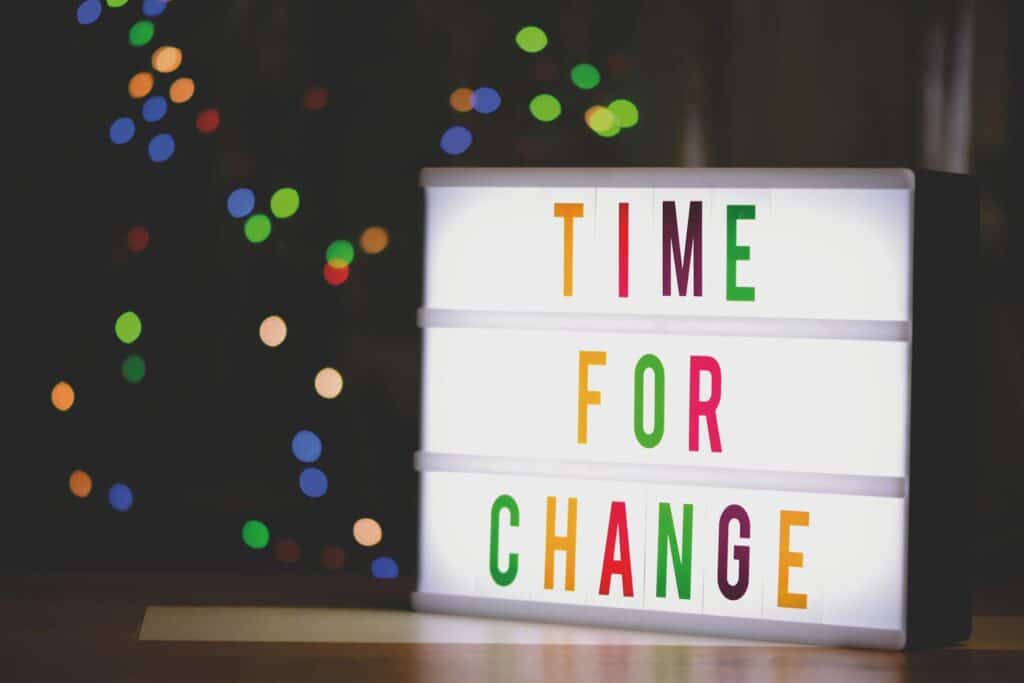
What no one told you about change is that change can make other people stop recognizing you. Sometimes that does not happen because you are doing something wrong. Sometimes it happens because they were used to an older version of you.
That can feel strange and even painful. When you start thinking differently, setting healthier boundaries, slowing down, speaking more honestly, or caring for yourself in a new way, the people around you may not always know how to respond. Some may suppornew versiont you. Some may feel confused. Some may even act as if you have changed too much. But growth often looks unfamiliar to people who only knew the version of you that stayed small, adapted, or remained emotionally available in the same old ways.
On With Love Ana, NURA is presented as a guided AI companion built to help people understand emotional patterns, notice how emotions show up in the body, and build healthier mental habits through reflection. The site also features the Emotional Clarity Test as a first step toward self-understanding and clearly states that NURA is support for wellbeing, not medical diagnosis or treatment.
What No One Told You About Change
What no one told you about change is that real change does not only affect you. It also changes the emotional agreements people had with the older version of you.
Maybe they were used to you saying yes. Maybe they were used to you staying quiet. Maybe they were used to you overexplaining, overgiving, or making yourself easy to read. When that starts to shift, some people may feel like they no longer know you. In truth, they may simply be meeting a version of you that is more honest, more aware, and less willing to live only from old habits.
That can be uncomfortable, but it is not automatically a bad sign.
Sometimes the discomfort around change comes from the fact that your new self no longer fits the role your old self used to play. And when that happens, people may not always celebrate your growth right away.
7 Powerful Truths About Change No One Told You and Why People May Not Recognize the New Version of You
People often build expectations around who you have been, not always around who you are becoming.
If someone has known you as the person who always adjusted, always helped, always kept the peace, or always responded in predictable ways, your growth may feel disruptive to them. Even healthy change can look unfamiliar when others were emotionally attached to your older patterns.
This is especially true when your growth challenges what used to benefit them. A healthier boundary may feel like distance to someone who expected unlimited access. More self-respect may feel like coldness to someone who benefited from your lack of limits. More honesty may feel like rejection to someone who preferred the quieter version of you.
That does not mean your change is unkind. It may simply mean it is real.
What no one told you about change is that not everyone will recognize you when you stop living from the same emotional script.
Why That Does Not Mean Your Change Is Wrong
One of the hardest parts of personal growth is learning not to measure your healing by other people’s comfort.
If people misunderstand your new boundaries, your quieter energy, your different priorities, or your more honest decisions, you may question yourself. You may wonder whether you have become too distant, too different, or too hard to love. But growth often asks you to tolerate being misunderstood for a while.
That does not make you selfish. It makes you brave enough to keep becoming.
Psychological research suggests that self-concept clarity, meaning how clearly and consistently people understand themselves, is linked to subjective wellbeing over time. In a 2023 longitudinal study, higher self-concept clarity was associated with higher subjective wellbeing, supporting the idea that becoming clearer about who you are can matter deeply for emotional health.
So if change is making your life feel different, that does not automatically mean you are losing yourself. You may actually be meeting yourself more honestly.
A Biodecoding Perspective on Change
From the perspective of biodecoding, change can bring emotional tension because it often activates old loyalties, fears, and adaptation patterns. This does not replace medical care, diagnosis, or treatment. It is simply a reflective lens that may help someone explore what emotional meanings are active during a period of transformation.
Seen through that lens, change may feel intense because part of you is still connected to the identity that once helped you feel accepted, safe, or needed. Even if that older version of you no longer feels fully aligned, letting it go can still create inner conflict. You may feel pulled between who you have been and who you know you are becoming.
Some people also notice that seasons of change affect the body. Fatigue, restlessness, sleep disruption, body tension, emotional sensitivity, or mental rumination may become more noticeable. That does not mean every symptom has one emotional cause. It simply reminds us that emotional change is often felt through the whole system, not only through thoughts.
What Research Says About Identity and Wellbeing
Research continues to support the idea that identity matters for wellbeing. Beyond the link between self-concept clarity and wellbeing, newer research also points to a meaningful relationship between identity and habit formation. A 2025 meta-analysis found a significant positive correlation between habit and identity, suggesting that identity and repeated behavior influence one another in important ways.
That matters because change is not only about external decisions. It is also about identity becoming more coherent over time. When your values, habits, and self-understanding begin to align, your life may start looking different from the outside.
And that difference may confuse people who were more familiar with your old patterns than your deeper truth.
https://pubmed.ncbi.nlm.nih.gov/40105110
A Gentle Invitation to Take the Clarity Test
If this feels familiar, and you have been feeling emotionally overwhelmed, disconnected, or unsure why your inner world feels different lately, the NURA Emotional Clarity Test can be a gentle place to begin.
It is a simple first step to help you explore your emotional patterns, better understand what may be happening beneath the surface, and put words to what you are feeling. On With Love Ana, NURA is presented as a guide to help people understand their emotional patterns and move toward real clarity.
What no one told you about change is that change can make other people stop recognizing you because they were used to an older version of you.
That can hurt. It can feel lonely. It can make you wonder whether becoming more honest is costing you too much.
But not being recognized by the same people in the same way does not always mean you are losing yourself. Sometimes it means you are no longer available for the role your old self had to play. Sometimes it means you are becoming clearer, steadier, and more aligned than before.
And maybe that is one of the bravest things about change: not that everyone understands it, but that you keep honoring it anyway.
With love, Ana